3-Ingredient Gluten-Free Pickle Cookies (Easy & Viral)

Introduction to the 3-Ingredient Gluten-Free Pickle Cookies
When my 11-year-old daughter Emma was first diagnosed with celiac disease, I didn’t think 3-ingredient gluten-free pickle cookies would ever be a phrase I’d say out loud—much less love. But here we are. A TikTok recipe caught our eye, and after plenty of testing (and laughing through the weirdness), we nailed it.
These cookies are briny, nutty, and totally addictive. They’re not just gluten-free—they’re good. We’ve served them to friends who swore they hated pickles and still went back for seconds. If you’re curious (or already a diehard dill lover), this one’s for you. If you love recipes that feel like a “how is this only a few ingredients?” moment, my Simple Gluten Free Desserts with Few Ingredients post has more low-stress wins like this.
Why This Recipe Works
I know. Pickle cookies sound like a dare. But hear me out. This easy, gluten-free recipe isn’t just viral—it’s actually clever. The tangy punch of pickles gives each bite a unique, salty twist, and when blended with soaked cashews, it turns into a creamy, nutty dough that’s sturdy and soft at the same time. Coconut flour pulls it all together with structure and a mild sweetness.
For folks with celiac disease, baking without gluten can be a minefield of crumbly cookies or soggy centers. But this recipe sidesteps those pitfalls. No eggs, no gums, no tricky substitutes. Just real food that holds together naturally. The result? A chewy, no-bake cookie that feels like a snack and a conversation starter in one.
Even better? It comes together in under 10 minutes (not counting the soak), so it’s perfect when Emma wants to help in the kitchen or when I need a last-minute treat for a party that’ll get people talking. And yes, it’s safe for celiacs—as long as your pickles are gluten-free (we’ll cover that more below).
According to the Celiac Disease Foundation, even trace amounts of gluten can trigger symptoms for people with celiac disease, which is why ingredient labels matter so much.
These pickle cookies are just the kind of quirky magic that makes GFree Desserts what it is: simple, surprising, and actually worth making. If you’re building a little no-bake rotation (especially for warm days or last-minute parties), you’ll love my Easy Gluten Free Desserts No Bake roundup.
3-Ingredient Gluten-Free Pickle Cookies
Equipment
- High-powered blender or food processor
- Mixing bowl or jar (for soaking)
- Knife
- Measuring cups
Ingredients
Pickle Cookie Dough
- 1 large jar pickles or pickled gherkins use the pickle juice for soaking; ensure labeled gluten-free
- 1 cup cashew nuts 150g; soak overnight in drained pickle juice
- 3/4 cup coconut flour 85g; add more as needed if dough is too wet
Optional Garnish
- mustard seeds sprinkle on top, optional
- chopped dill optional
Instructions
- Drain the pickle jar and pour the pickle juice over the cashews. Cover and refrigerate overnight.
- Drain the cashews (reserve a little brine if needed later).
- Blend the drained cashews with 2–3 large pickles until a thick, sticky paste forms (add 1–2 teaspoons pickle brine if the mixture is too dry to blend).
- Add the coconut flour and blend/pulse again until fully incorporated. If the dough is too soft or sticky, add more coconut flour 1 tablespoon at a time until it’s firm enough to roll.
- Slice 2–3 extra pickles into coin shapes about 1/2 cm thick. Pat the coins dry if needed.
- Scoop and roll the dough into 16 evenly sized balls (about a heaping tablespoon each).
- Press a pickle coin on top of each ball. Sprinkle with mustard seeds or chopped dill if using.
- Chill 15–20 minutes before serving. Store in an airtight container in the fridge for up to 5 days.
Notes
- Make sure your pickles are clearly labeled gluten-free, and always double-check ingredient labels when cooking for someone with celiac disease.
- Soaking the cashews overnight in pickle juice is essential for a smooth, scoopable dough.
- If the dough feels too wet to roll, add more coconut flour a little at a time until it holds together.
- Pat pickle coins dry before topping the cookies so they don’t slide off.
- Chill for 15–20 minutes before serving for best texture.
- Store in an airtight container in the refrigerator for up to 5 days.
- Make-ahead: prepare the dough up to 2 days in advance; shape the cookies the day of serving.
- Freezer-friendly: freeze in a single layer, then transfer to a freezer bag; thaw overnight in the fridge.
- Swap cashews with raw sunflower seeds or blanched almonds (soak and blend the same way).
- If using almond flour instead of coconut flour, start with 1½ cups since it’s less absorbent; expect a softer texture.
Ingredients for 3-Ingredient Gluten-Free Pickle Cookies
Getting the texture and taste right with just three ingredients means every part matters. Here’s what each one does, and what to know when choosing them:
1) Pickles or Pickled Gherkins
This is the heart of the flavor. Dill pickles bring a sharp, tangy kick that balances out the nutty base. You’ll use both whole pickle slices and the brine. Make sure your pickles are labeled gluten-free—some brands offer gluten-free options, but always double-check the label.
2) Cashew Nuts (1 cup / 150g)
Soaking these in the pickle juice overnight softens them and infuses them with flavor. Once blended, they turn into a creamy, thick paste that becomes the dough’s base. Don’t skip the soak—it’s what makes the texture work.
3) Coconut Flour (3/4 cup / 85g)
This binds everything together. Coconut flour is naturally gluten-free and incredibly absorbent, which is why you need so little. It firms up the cashew-pickle paste and gives these cookies structure without baking. If your dough feels too wet, add a little more until it holds its shape.
Optional Garnish (for a fancier take)
Sprinkle with mustard seeds or chopped dill before serving for an extra savory twist. Totally not necessary—but it looks pretty great on a party tray.
Tip: If you’ve ever struggled with gluten-free cookies crumbling, this dough will be a relief—it sticks together beautifully, and no baking means no risk of over-drying.
How to Make 3-Ingredient Gluten-Free Pickle Cookies
This recipe is all about feel—how the dough comes together, how firm the pickle slices are, and how it holds its shape. I’ve tested it multiple ways to make sure it’s simple and foolproof. Here’s what works:
- Soak the cashews overnight in pickle juice. Drain your pickle jar and save that briny goodness. Pour it over the cashews in a bowl or jar, cover, and refrigerate overnight. This step is non-negotiable—softening the cashews is key to getting that smooth, scoopable dough.
- Drain the cashews, but keep a little brine. The next day, drain the cashews. You don’t want them sopping wet, but a bit of moisture helps blending. If your mix feels dry later, you can add a teaspoon or two of brine back in.
- Blend the cashews with 2–3 large pickles. Use a high-powered blender or food processor. You’re aiming for a thick, sticky paste. It should look like chunky hummus with flecks of green.
- Add coconut flour and blend again. Toss in the 3/4 cup coconut flour and pulse until fully incorporated. If the dough’s too soft, add another tablespoon of flour. You want it firm enough to roll without sticking to your hands. New to gluten-free baking and tired of crumbly cookies? My Your Top 20 Questions About Easy Gluten-Free Baking Answered post breaks down binders, flours, and “why it fell apart” in plain English.
- Slice extra pickles into “coins.” These are your toppers. Cut them about 1/2 cm thick. They should be firm and not too juicy—pat them dry with a paper towel if needed.
- Roll the dough into balls. Scoop out pieces of dough (a heaping tablespoon each) and roll into 16 even-sized balls.
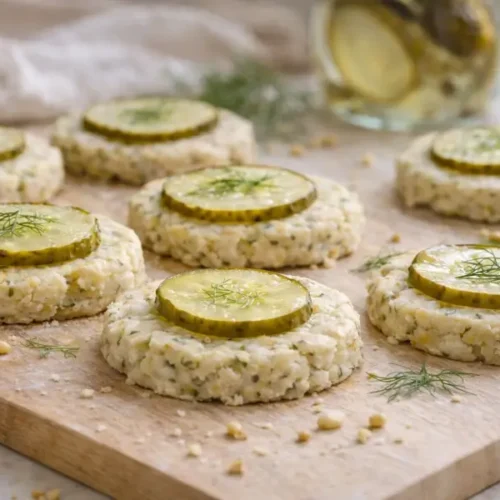
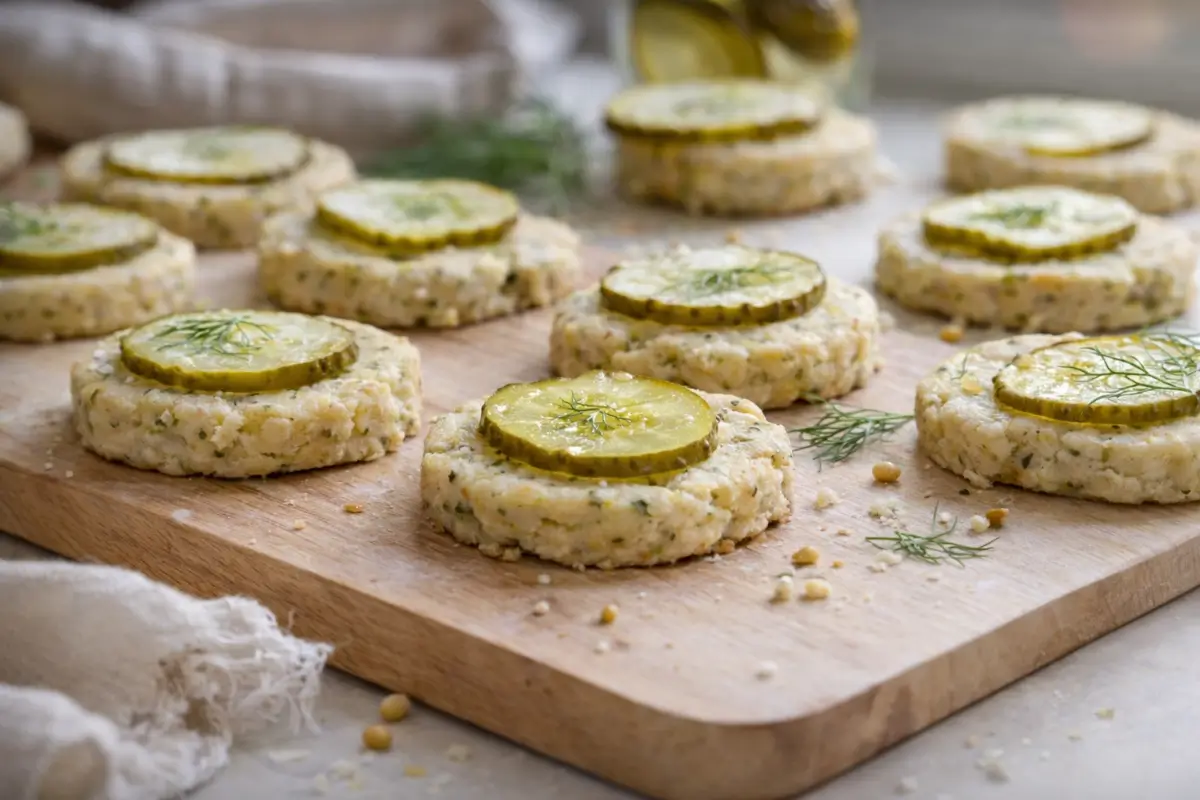
- Press a pickle coin on top of each. This adds the “cookie” look and the extra pickle bite. Press gently—it should sit flat, not sink in too far.
- Chill for 15–20 minutes before serving. They taste best when slightly chilled and firmed up. Store them in an airtight container in the fridge for up to 5 days.
Recovery tip: If your dough gets too wet to roll, mix in a spoonful more coconut flour and stir by hand until it firms up again. No need to start over.
Rachel’s Tips & Tricks
Make It Yours
There’s room to play with this recipe, even with just three ingredients. Swap in bread-and-butter pickles for a sweet-and-sour vibe (check the label for hidden gluten). Or add a pinch of garlic powder or smoked paprika for a savory twist. Emma likes a few with mustard seed sprinkled on top—it’s oddly addictive. Need a school-safe version for nut-free classrooms or allergy-heavy families? Start with my Gluten Free Nut Free Desserts for Beginners collection (and you can swap cashews for sunflower seeds here, too).
When to Make This
These are best when you need a no-bake conversation piece. Think: game night snacks, picnic trays, or that one friend who says, “I love pickles more than life.” They’re also a great option for nut-free spaces if you swap the cashews with sunflower seeds (same soak process applies). For more beginner-friendly “first win” desserts Emma always approves, browse my Best Easy Gluten Free Desserts for Beginners roundup next.
How to Serve Them
Beyond cookies? Honestly, these make fun little savory bites alongside gluten-free crackers or a snacky board. They’re also a great party app if you dress them up with a little dill and a toothpick.
Storage & Make-Ahead
These cookies are happiest in the fridge. Store them in an airtight container for up to 5 days. They actually get better by day two—the pickle flavor mellows slightly, and the texture firms up. If you’re making them for a party, you can prep the dough up to 2 days ahead and shape them the day-of.
They also freeze well! Freeze them in a single layer, then transfer to a bag once firm. Defrost in the fridge overnight. Perfect for late-night snack raids or when you need something fun to pack in a lunchbox.
Common Mistakes (and How to Fix Them)
- Dough too wet? You likely added pickles with too much juice or didn’t drain the cashews enough. Add more coconut flour—just a little at a time—until it holds together when rolled.
- Pickle slices sliding off? Make sure they’re patted dry before pressing into the dough. The moisture makes them slippery.
- Blender won’t blend? Your cashews may not be soaked long enough or your blender isn’t strong. Add a teaspoon of pickle juice and pulse slowly. A food processor works best here.
Budget-Friendly Swaps
- Cashews too pricey? Use raw sunflower seeds or blanched almonds instead. Soak and blend the same way. Sunflower seeds are also nut-free.
- No coconut flour? Almond flour can work, but you’ll need more (start with 1 1/2 cups) because it’s less absorbent. The texture will be softer, but still tasty.
- Fancy pickle brands too much? Look for store-brand dill pickles with a “gluten-free” label. Avoid anything with malt vinegar or vague “spices.”
FAQs
Can people with celiac disease eat pickles?
Yes—but not all pickles are gluten-free. Most dill pickles are safe, but always check the label for hidden gluten sources like malt vinegar, natural flavors, or thickeners. When in doubt, choose certified gluten-free brands. The U.S. Food and Drug Administration (FDA) defines gluten-free foods as containing fewer than 20 parts per million of gluten, which is the standard used on packaged pickles labeled gluten-free.
How do you make gluten-free cookies stay together?
In this recipe, coconut flour is the secret. It’s super absorbent and binds the dough without eggs or gums. If your cookies are falling apart, add more coconut flour or chill the dough for 10–15 minutes before shaping. If you’re also trying to keep sugar lighter while staying gluten-free, my Gluten Free Sugar Free Desserts roundup has lots of naturally lower-sugar options.
Are Vlasic sweet pickles gluten-free?
Many Vlasic products, including their classic dills and sweet pickles, are considered gluten-free by ingredient. However, the company doesn’t certify them gluten-free, so if you’re extra sensitive, choose a brand with certified labeling. According to Vlasic’s official FAQ, many of their pickle products do not contain gluten ingredients, though they are not certified gluten-free.
Are UTZ fried dill pickle chips gluten-free?
Some varieties are gluten-free, but not all. Always look for the certified gluten-free symbol on the packaging. Some versions may contain wheat ingredients or be made in shared facilities. Organizations like the Gluten Intolerance Group recommend looking for certified gluten-free symbols on packaged snacks, especially flavored or fried foods like pickle chips.
Nutritional Information (Estimated per cookie)
Because these cookies are made with just a few whole-food ingredients, they’re naturally packed with healthy fats and fiber—no refined sugar or flours here. Here’s the estimated breakdown (based on 16 cookies, using standard cashews and coconut flour):
| Nutrient | Per Cookie |
|---|---|
| Calories | 105 |
| Fat | 8g |
| Carbohydrates | 6g |
| Fiber | 2g |
| Protein | 2g |
| Sugar | <1g |
These cookies are naturally grain-free, dairy-free, vegan, and paleo-friendly—just check your pickle labels to match your dietary needs.
Conclusion
Look, I know these 3-ingredient gluten-free pickle cookies might sound like a punchline, but once you try them, you’ll get why my whole family’s hooked. They’re salty, creamy, and satisfyingly weird—in the best way. Recipes like this remind me why I started GFree Desserts in the first place: because gluten-free baking can be fun, creative, and actually delicious. Emma and I had a blast making these, and even more fun watching our friends go from confused to obsessed.
Curious enough to try it? All you need is a jar of pickles and a handful of cashews.