The Only Easy Gluten Free Cheesecake Recipe You’ll Ever Need
Easy Gluten Free Cheesecake Recipe (New York-Style, Silky & Crack-Resistant)
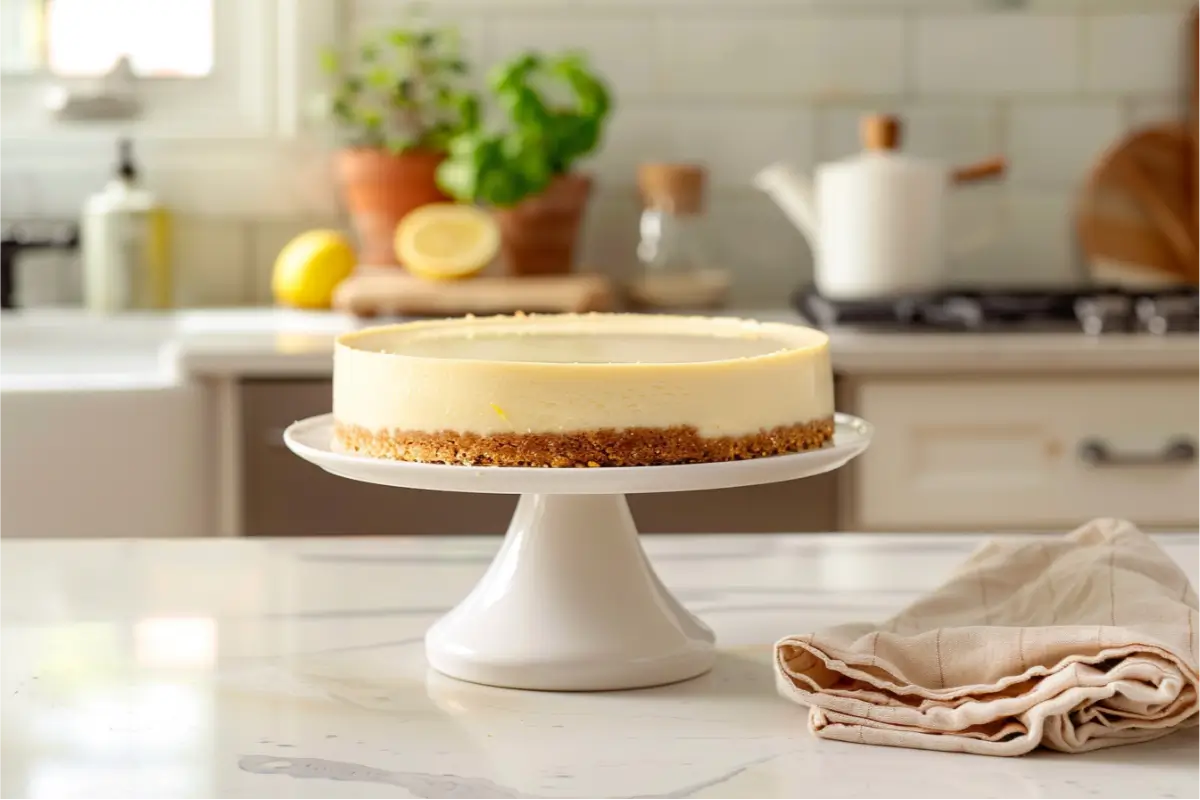
Looking for an Easy gluten free cheesecake recipe that tastes like the real deal? Same, friend. After years of testing for Emma’s celiac-safe birthdays, this version delivers that dense-yet-creamy New York texture with a buttery GF crust—no guesswork, no fuss, and no “good for gluten-free” qualifiers.
If you’re more in the mood for bars, mug cakes, or quick bakes, you’ll find plenty of options in my roundup of easy gluten free desserts — it’s the perfect companion to this cheesecake when you’re planning a whole dessert table.
I made every mistake. I baked it too fast, too hot, forgot the water bath, skipped cooling time, overbeat the eggs (more than once). I’ve pulled cracked, sunken messes out of the oven and cried into a mixing bowl at midnight. At one point, my husband gently asked, “Are you okay?” I answered, “The cheesecake’s not.” (Still not sure he was asking about the cake.)
Why This Easy Gluten Free Cheesecake Recipe Actually Works
GF crusts need the right butter-to-crumb ratio so they slice clean instead of crumbling. Slow, low-air mixing keeps the filling silky and reduces cracks, while a water bath and gradual cool prevent the dreaded cheesecake “tantrum.” Certified gluten-free ingredients keep it celiac-safe.
This recipe was built for us. The crust holds together beautifully, thanks to the right butter ratio. The filling uses a low-speed mix to avoid air pockets that lead to cracks, and that spoonful of cornstarch or sweet rice flour? It’s your silent hero — adds structure without changing the texture. And the water bath? It’s like a spa day for your cheesecake — soft, gentle, and 100% worth the effort.
Ingredient Notes: The Essentials
For the crust
- 1½ cups (225g) gluten-free graham cracker crumbs – Kinnikinnick or Schär honeygrams; GF snickerdoodles also work (Emma’s pick).
- ¼ cup (50g) granulated sugar – Sweetens without overpowering.
- 5 to 6 tbsp (75–85g) unsalted butter, melted – Start with 5 tbsp; add more if crumbs look dry.
- ½ tsp cinnamon (optional) – Cozy warmth and amazing aroma.
For the filling
- 4 blocks (32 oz/904g) full-fat cream cheese – Blocks, not whipped (Philadelphia preferred).
- 1⅓ cups (267g) granulated sugar – Classic flavor; coconut sugar overwhelms.
- ⅔ cup (160g) full-fat sour cream – Signature NY tang and body.
- 4 large eggs, room temp – Warm to avoid lumps.
- 2 tsp vanilla extract – Vanilla bean paste if you have it.
- 1 tbsp GF cornstarch or sweet rice flour – Optional crack insurance.
- 1 tsp lemon zest (optional) – Brightens without reading “lemon cheesecake.”
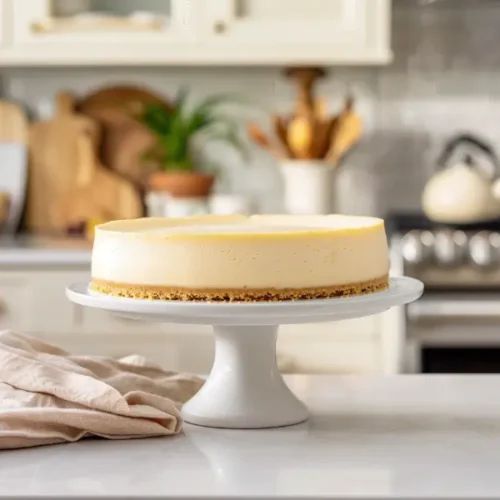
Easy Gluten Free Cheesecake Recipe (New York-Style, Silky & Crack-Resistant)
Ingredients
For the crust
- 1 1/2 cups gluten-free graham cracker crumbs 225g; Kinnikinnick or Schär honeygrams; gluten-free snickerdoodles also work
- 1/4 cup granulated sugar 50g; sweetens without overpowering
- 5-6 tbsp unsalted butter 75–85g; melted; start with 5 tbsp and add more if crumbs look dry
- 1/2 tsp cinnamon optional; adds cozy warmth and aroma
For the filling
- 32 oz full-fat cream cheese 4 blocks; about 904g; use blocks, not whipped; Philadelphia preferred; softened to room temperature
- 1 1/3 cups granulated sugar 267g; classic flavor; avoid coconut sugar, which can overwhelm
- 2/3 cup full-fat sour cream 160g; adds tang and body for New York-style texture
- 4 large eggs at room temperature to help avoid lumps
- 2 tsp vanilla extract vanilla bean paste can be used instead for extra flavor
- 1 tbsp gluten-free cornstarch or sweet rice flour optional; helps prevent cracks
- 1 tsp lemon zest optional; brightens flavor without making it taste like lemon cheesecake
Instructions
- Heat oven to 325°F (163°C). Wrap a 9-inch springform pan in two layers of heavy-duty foil to help keep water out. Grease the sides and bottom of the pan. Set a large roasting pan on the center rack of the oven and start a kettle of water boiling for the water bath.
- In a mixing bowl, stir together the gluten-free graham cracker crumbs, granulated sugar, and cinnamon (if using). Pour in the melted butter and mix until the crumbs look like wet sand and hold together when pinched; add an extra tablespoon of butter if the mixture seems too dry. Press the crumb mixture firmly into the bottom of the prepared springform pan using a flat measuring cup. Bake for about 10 minutes, then remove and let the crust cool completely.
- On low mixer speed, beat the softened cream cheese in a large bowl until completely smooth and free of lumps. Add the granulated sugar and cornstarch or sweet rice flour, mixing on low and scraping down the bowl as needed. Add the sour cream, vanilla, and lemon zest (if using), and mix just until smooth. Add the eggs one at a time, mixing gently on low after each addition and avoiding whipping in too much air, since excess air can cause cracks.
- Pour the cheesecake batter over the cooled crust in the springform pan. Gently tap the pan on the counter a few times to help release any large air bubbles.
- Place the foil-wrapped springform pan into the roasting pan in the oven. Carefully pour the boiling water into the roasting pan until it comes 1 to 1 1/2 inches up the sides of the springform pan. Bake for 60–75 minutes, until the edges are set and the center still jiggles slightly when gently shaken. If using a thermometer, the center should register about 150–155°F.
- Turn off the oven, crack the door open slightly, and leave the cheesecake inside for 1 hour to cool gradually. Remove the springform pan from the water bath, carefully unwrap the foil, run a thin knife around the edge to loosen, and let the cheesecake cool completely on a rack.
- Once completely cool, wrap the cheesecake and refrigerate for at least 4 hours, preferably overnight, until fully chilled and set. To serve, slice with a hot knife, dipping the blade in hot water and wiping it clean between cuts. Serve plain or with toppings such as fresh berries, fruit compote, or caramel drizzle.
Notes
– Swap in almond-flour crusts from other easy gluten free chocolate desserts for a richer, nutty base.
– For dairy-free or no-bake variations, use no-bake cheesecake jars and browse other easy gluten free desserts that match your needs. • Getting the Perfect Crust Texture
– Texture depends on the crumb-to-butter ratio.
– Aim for a slightly sandy mixture that holds together when pinched.
– This bakes into a crisp crust without turning greasy. • Preventing Cracks
– Cracks usually come from one of these issues:
• Overmixing and incorporating too much air
• Skipping the water bath
• Cooling the cheesecake too quickly
– Solutions:
• Mix on low
• Use a proper water bath
• Cool gradually for the smoothest, crack-free top • Avoiding Lumpy Batter
– Lumps happen when cream cheese or eggs are too cold.
– Bring both to room temperature before mixing.
– If lumps persist, gently warm the bowl over hot water and mix on low. • Fixing a Watery or Weak Crust
– Usually caused by too much butter or an underbaked base.
– Reduce butter slightly next time.
– Fully bake the crust until set before adding filling. • If Cracks Still Happen
– Don’t stress — the flavor and texture remain excellent.
– Simply cover the top with whipped cream, fresh berries, or a drizzle of sauce and serve proudly.
Instructions (With the “Why” Built In)
- Prep the pan & oven: Heat oven to 325°F (163°C). Wrap a 9-inch springform in two layers of heavy-duty foil (keeps water out). Grease sides and bottom. Set a large roasting pan on center rack and boil a kettle for the water bath.
- Make the crust: Stir GF crumbs, sugar, cinnamon. Mix in melted butter until it looks like wet sand and holds when pinched; add 1 tbsp more butter if dry. Press into pan with a flat measuring cup. Bake 10 minutes; cool.
- Mix the filling slowly: On low speed, beat softened cream cheese until lump-free. Add sugar and cornstarch; mix on low, scraping bowl. Add sour cream, vanilla, lemon zest; mix just until smooth. Add eggs one at a time, mixing gently after each—avoid whipping air (air = cracks).
- Pour & tap: Pour batter over cooled crust. Gently tap the pan on the counter to pop air bubbles.
- Bake in a water bath: Place springform in roasting pan. Pour boiling water to 1–1.5 inches up the sides. Bake 60–75 minutes until edges are set and center jiggles slightly; pull at 150–155°F (instant-read).
- Cool gradually: Turn oven off; crack the door and leave cheesecake inside 1 hour. Remove from bath, run a thin knife around edge, and cool completely on a rack.
- Chill overnight: Wrap and refrigerate at least 4 hours, preferably overnight. Slice with a hot knife (dip in hot water; wipe between cuts). Serve plain, with berries/compote, or a caramel drizzle.
You can also use almond flour crusts in our easy gluten free chocolate desserts for a richer, nutty base. For dairy-free or no-bake twists, check out my easy gluten free desserts no bake and the cheesecake jars we keep on repeat. And if you’re curious why the crust behaves the way it does, I break down the science in Your Top 20 Questions About Easy Gluten-Free Baking Answered.
Rachel’s Tips for the BEST Results
Troubleshooting
- Cracks: Usually from overmixing air, skipping the bath, or cooling too fast. Low speed + water bath + gradual cool = smooth top.
- Lumpy batter: Bring cream cheese and eggs to room temp. If needed, gently warm bowl over hot water and mix on low.
- Watery crust: Too much butter or underbaked. Reduce butter slightly next time and bake the crust fully.
If it cracks anyway? Y’all, that’s what toppings are for. Slice it, pile on whipped cream or berries, and call it rustic. The taste doesn’t change. In fact, my daughter once said her cracked cheesecake slice looked like a treasure map. I ran with it.
Budget Swaps
- Cream cheese: Full-fat store brand blocks work; avoid whipped tubs with stabilizers.
- Sour cream: Whole-milk yogurt works in a pinch (tangier, slightly looser set).
- GF crumbs: Crushing your own crackers is cheaper—kids love the rolling-pin job.
Dairy-Free Tweaks
Use Daiya or Kite Hill plain cream cheese and coconut cream instead of sour cream (slightly softer, coconut-forward).
If you’re working with a tight pantry list or last-minute guests, you might also love my simple gluten free desserts with few ingredients — lots of make-ahead treats that play really nicely next to a classic cheesecake on a party spread.
Flavor Variations I’ve Tested
| Variation | What I Changed | Topping Ideas |
|---|---|---|
| Chocolate Swirl | Stir ½ cup melted GF dark chocolate into half the batter; swirl in. | Shaved chocolate, cocoa whipped cream |
| Lemon-Raspberry | Add 1 tbsp lemon juice + zest; dollop raspberry jam and swirl. | Fresh raspberries, lemon zest |
| Crustless (Low-Carb) | Skip crust; line pan with parchment. | Berries, sugar-free chocolate sauce |
| Mini Cheesecakes | Bake in lined muffin tins, ~22 minutes. | Set up a topping bar for guests |
Rachel’s Gluten Free Cheesecake Troubleshooting & Secrets (From 12 Batches of Trial and Error)
Here’s the thing, y’all — I’ve baked more cheesecakes than I can count, but only after the twelfth attempt did I finally feel like I understood them. Cheesecake doesn’t forgive shortcuts. It’s not hard, but it’s picky. And gluten-free cheesecake? Even pickier. Between crumbly crusts and overmixed fillings, I’ve seen it all.
So, if you’re standing in your kitchen right now wondering why yours cracked, leaked, or sank — pull up a chair. I’ve been there. And I’ve got you.
So, if you’re standing in your kitchen right now wondering why yours cracked, leaked, or sank — pull up a chair. And if you want a bigger-picture look at how gluten free flours, starches, and binders behave in everything from cakes to cookies, hop over to Your Top 20 Questions About Easy Gluten-Free Baking Answered when you’re done here.
1. The “Cracked Top” Crisis
Cracks happen when your cheesecake is stressed — usually from heat or haste. The main culprits are overmixing, baking too hot, or cooling too fast. Gluten-free batters can also be a little looser, which means they’re more sensitive to sudden temperature changes.
The fix? Think calm and low and slow. Keep your mixer on low speed the whole time (especially once the eggs go in). Mix just until combined, then stop. You’re not whipping cream — you’re building custard.
I also swear by the water bath method. Yes, wrapping your pan in foil and pouring boiling water around it sounds fussy. But that gentle, even heat creates the silkiest texture you’ve ever tasted. When I skip it, the edges overbake while the middle sulks and splits. I learned that the hard way… twice.
And if it still cracks? Don’t panic. A dollop of whipped cream or a swirl of berry compote hides everything. I once brought a cracked cheesecake to a church potluck, topped it with strawberry jam, and three people asked for the recipe.
2. The Soggy Crust Saga
Let’s talk about the bottom — literally. Gluten-free graham crumbs soak up butter differently than traditional ones, so it’s easy to end up with a soggy crust or one that falls apart when sliced.
The trick is balance: the crumbs should feel like wet sand, not sludge. Too little butter and it crumbles; too much and it leaks. I use about 5 tablespoons melted butter per 1½ cups crumbs, and I always bake the crust for 10 minutes before adding the filling. That toasty, golden pre-bake locks everything in.
Oh, and one more thing: wrap your springform pan tighter than you think. Foil is your friend. I once skipped a layer to “save time.” Big mistake. My cheesecake looked like it had been for a swim.
3. The “Why Is It Lumpy?” Mystery
Lumps are one of the biggest rookie frustrations — especially when you’re using cold ingredients. I get it. Sometimes you just want to bake without waiting two hours for cream cheese to soften. But here’s the truth: cold cream cheese = lumps that never go away.
Take your ingredients out early — at least 45 minutes before mixing. If you forget (and I usually do), you can cheat by putting the foil-wrapped cream cheese in a bowl of warm water for 10 minutes. Works every time.
And when mixing, scrape down the bowl often. Gluten-free batters tend to cling more to the sides, so you’ve got to stay vigilant.
4. The “It Sunk in the Middle” Situation
We’ve all been there — your cheesecake looks perfect in the oven, then caves like a deflated balloon once it cools. This happens when the outside sets before the center is done, then contracts unevenly.
The secret? Gentle heat + slow cool. Bake at 325°F, not 350°F. If you can swing a water bath, do it. And resist the urge to open the oven door — every peek lets out heat and messes with the baking process.
After baking, let it sit in the oven with the door cracked for an hour. Then cool it fully at room temperature before chilling. The gradual temperature drop gives you that smooth, level top.
I tell folks it’s like putting a baby to sleep — don’t rush it, don’t shake it, and definitely don’t poke it before it’s ready.
5. The “How Do I Slice It Cleanly?” Trick
Nothing ruins a gorgeous cheesecake faster than a messy slice. Here’s my foolproof trick: a hot knife, wiped between cuts.
I dip a sharp knife in hot water, dry it, slice once, wipe clean, and repeat. Yes, it’s extra work, but you get those beautiful café-style cuts that make your cheesecake look professional.
If I’m serving for guests, I’ll even run the knife under boiling water and keep a towel handy. That small detail makes a homemade cheesecake look like something from a bakery display case.
6. When in Doubt, Decorate
Sometimes things go sideways — cracks, uneven tops, weird edges. Don’t sweat it. Cheesecake forgives a lot if you top it well.
A swirl of raspberry compote, a drizzle of salted caramel, or even a handful of fresh berries and powdered sugar can turn a “meh” bake into a masterpiece.
My daughter Emma once said, “Mom, if it tastes good, nobody cares what it looks like.” She’s right. (Though I did gently smooth out her glitter overload the next time.)
7. Make It Yours
I know everyone says baking is a science — and it is — but it’s also a little personal. Once you’ve nailed the basics, try swapping flavors or playing with crusts: almond flour for a nutty twist, cinnamon cookies for fall, or chocolate wafer crumbs for something decadent.
You can even bake it in mini pans or jars for gifts. One reader, Jenny from Dallas, told me she baked this exact recipe in mason jars for her wedding dessert table. “Not one person guessed it was gluten-free,” she said. “They just asked for seconds.”
That right there? That’s why I bake.
8. My Honest Advice
Here’s the truth: a perfect cheesecake doesn’t happen because you followed every rule. It happens when you bake with patience and a little love.
Don’t rush the steps. Use good ingredients. And if something goes wrong, learn from it. I’ve made enough cracked cheesecakes to fill a freezer — and every one taught me something that made the next one better.
And when that smooth, creamy, golden-topped beauty finally comes out of your oven? You’ll know it was worth it.
FAQs: From One Gluten-Free Family to Another
What makes a cheesecake gluten-free? Mostly the crust. Use certified GF graham crumbs (or cookies) and a safe starch like cornstarch or sweet rice flour in the filling. If you’re new to swapping flours and binders, I walk through the basics in Your Top 20 Questions About Easy Gluten-Free Baking Answered so you can tweak this recipe with confidence.
Can someone with celiac disease eat this? Yes—if made GF from the bottom up. Read every label and avoid cross-contact (clean tools, bowls, no shared utensils).
For more on what makes foods safe for people with celiac disease, visit the Celiac Disease Foundation’s guide to gluten-free living.
What defines New York cheesecake? Rich, dense, slightly tangy, baked low and slow (often in a water bath) so it slices clean and the flavor deepens overnight.
How do I prevent cracks? Mix gently (especially with eggs), use a water bath, cool gradually with the oven door cracked, and run a knife around the edge after baking. A bit of cornstarch helps structure.
Nutrition (Approx. Per Slice of 12)
- Calories: 435
- Fat: 33g (Saturated 19g)
- Sugar: 22g
- Protein: 7g
- Carbs: 27g
- Gluten: 0g (with certified GF ingredients)
This cheesecake isn’t “light”—it’s a celebration dessert. Rich, satisfying, and made with real, simple ingredients.
Rachel
Once you’ve mastered this base recipe, you can spin it into mini versions, bars, and jars — I’ve got a whole lineup of riffs in my easy gluten free cheesecake jars and other simple gluten free dessert ideas if you’re baking for parties, potlucks, or holidays.
Conclusion: From Our Kitchen to Yours
You don’t have to settle for “good for gluten-free.” This cheesecake is just good—period. Bake it, slice it, and share it. If you make it, email a photo so I can cheer you on from our Austin kitchen. Let’s make cheesecake the new love language.